
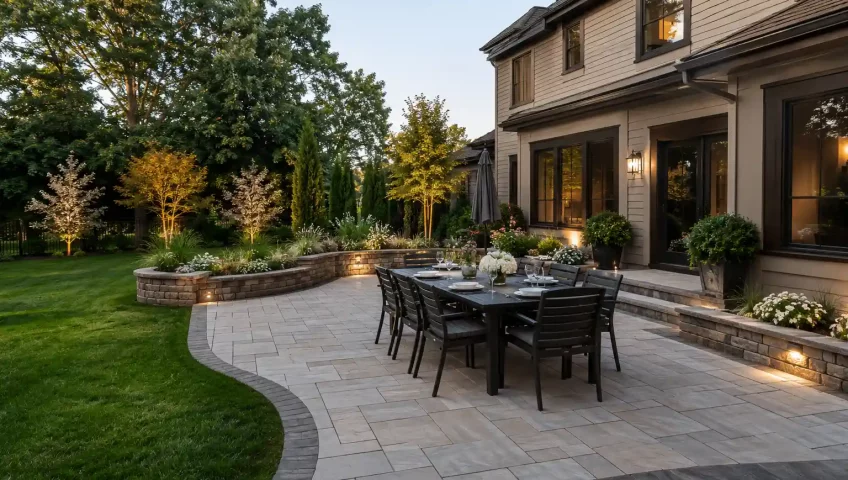
Building an outdoor living space can transform your home, but many homeowners make costly patio construction mistakes during planning and installation. From drainage problems to poor material choices, avoiding these errors can save time, money, and future repairs.
This guide covers the most common patio design mistakes and how to avoid them before your project begins.
1. Common Patio Construction Mistakes in Site Planning
One of the biggest patio construction mistakes is failing to plan drainage before installation.
Without proper grading, water can pool on the surface, weaken the foundation, and damage nearby landscaping or even your home’s foundation.
Best Practice:
- Grade the patio away from the house.
- Install drainage channels where needed.
- Use permeable materials if your property holds water.
2. Choosing Style Over Function
Many homeowners focus heavily on appearance but overlook how the patio will actually be used.
A beautiful patio may still fail if it lacks:
- Enough seating space
- Traffic flow
- Shade coverage
- Dining or entertainment zones
Successful patio construction balances design with daily functionality.
3. Patio Construction Mistakes When Choosing Materials
Material choice affects durability, maintenance, and long-term appearance.
Common mistakes include:
- Using materials that become slippery when wet
- Choosing products unsuited for freeze-thaw climates
- Mixing materials that clash with the home’s exterior
Popular patio materials include:
- Concrete pavers
- Natural stone
- Brick
- Stamped concrete
4. Patio Construction Mistakes in Patio Sizing
Another common patio construction mistake is underestimating the needed space.
Homeowners often forget to account for:
- Furniture dimensions
- Walking space
- Fire pits
- Outdoor kitchens
- Planters and decorative features
Rule of Thumb:
Always design for how you plan to use the space 3–5 years from now, not just today.
5. Skipping Base Preparation
A patio is only as strong as its foundation.
Poor base preparation often leads to:
- Sinking pavers
- Uneven surfaces
- Cracking
- Weed growth between joints
Professional patio construction requires proper excavation, compacted gravel base, and leveling sand.
6. Forgetting Lighting and Utilities
Many homeowners design their patio first, then think about electrical needs later.
This creates expensive retrofit work for:
- Landscape lighting
- Outdoor speakers
- Ceiling fans
- TV installations
- Heating systems
Planning utilities early makes the patio more functional and future-ready.
7. Ignoring Overall Landscape Integration
Your patio should feel connected to the rest of the property.
A disconnected patio may look unfinished or awkward.
Good patio design considers:
- Lawn transitions
- Walkways
- Garden beds
- Retaining walls
- Privacy screening
This creates a cohesive outdoor environment.
Expert Resources
The Lawn Artist MA Services
Explore project inspiration and services here:
The Lawn Artist MA Services
For additional patio planning ideas: