
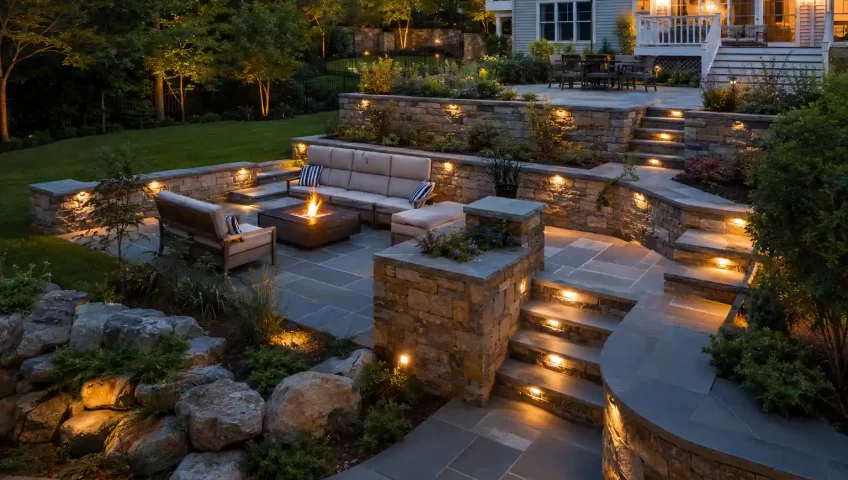
A sloped backyard may seem difficult to work with at first. However, sloped backyard patio construction can transform uneven ground into a functional and attractive outdoor retreat. Many homeowners in Massachusetts struggle with backyard slopes, drainage issues, and limited usable space. Fortunately, smart patio construction techniques make it possible to create a durable and visually appealing patio on almost any grade.
Whether you want a cozy entertainment area, an outdoor dining space, or a complete backyard transformation, understanding the right design and construction process is essential.
Why Sloped Backyard Patio Construction Requires Special Planning
Patio construction on a sloped backyard involves more than simply laying pavers or stone. Slopes affect drainage, soil stability, and long-term durability. Because of this, homeowners should focus on proper grading and structural support before installation begins.
A professionally designed patio can:
- Improve backyard functionality
- Prevent soil erosion
- Enhance drainage control
- Increase property value
- Create more entertaining space
- Improve overall landscaping aesthetics
Additionally, a well-planned patio can help maximize small or uneven yards that previously felt unusable.
Evaluate the Slope Before Sloped Backyard Patio Construction
Before beginning patio construction, it is important to assess the severity of the slope. Some yards have gentle inclines, while others require extensive grading or retaining walls.
Types of Sloped Backyard Patio Construction Projects
Gentle Slopes
Gentle slopes usually require minimal excavation. Contractors can often level the area with compacted base materials and slight grading adjustments.
Moderate Slopes
Moderate slopes often need retaining walls, terracing, or reinforced edging to create a stable patio foundation.
Steep Slopes
Steep slopes typically require engineered solutions, drainage systems, and multi-level patio construction designs.
Professional evaluation helps determine the safest and most cost-effective approach.
Best Sloped Backyard Patio Construction Designs
Choosing the right layout is one of the most important parts of patio construction on a sloped backyard. Fortunately, several design options work exceptionally well on uneven terrain.
Multi-Level Sloped Backyard Patio Construction
Multi-level patios divide the slope into separate functional spaces. For example, one level may serve as a dining area while another becomes a fire pit lounge.
Benefits of multi-level patio construction include:
- Better use of uneven space
- Improved drainage management
- Visually dynamic landscaping
- Easier movement across the yard
This style works especially well for larger Massachusetts properties with significant elevation changes.
Retaining Walls for Sloped Backyard Patio Construction
Retaining walls provide structural support while adding architectural appeal. Natural stone retaining walls blend beautifully with patio construction projects and landscaping.
Popular retaining wall materials include:
- Natural stone
- Concrete blocks
- Granite
- Fieldstone
- Engineered wall systems
Retaining walls also help reduce erosion during heavy rainfall and snowmelt.
Terraced Sloped Backyard Patio Construction
Terraced patios create several flat zones connected by steps or pathways. This design allows homeowners to preserve more of the natural landscape while adding functional outdoor living areas.
Terraced patio construction is ideal for:
- Steep backyard slopes
- Large outdoor entertainment spaces
- Garden integration
- Luxury landscape designs
Drainage Tips for Sloped Backyard Patio Construction
One of the biggest challenges in patio construction is water management. Without proper drainage, water can pool beneath the patio, damage the foundation, and cause shifting over time.
Drainage Solutions for Sloped Backyard Patio Construction
French Drains
French drains redirect groundwater away from the patio area. These systems are commonly installed beneath retaining walls and patio foundations.
Proper Grading
Professional grading ensures water flows away from the home and patio surface.
Permeable Pavers
Permeable pavers allow rainwater to pass through the surface and into the ground naturally.
Drainage Swales
Drainage swales help guide runoff away from outdoor living spaces.
Proper drainage not only protects your patio construction investment but also improves backyard safety.
Best Materials for Sloped Backyard Patio Construction
Material selection affects durability, appearance, and maintenance requirements. Massachusetts homeowners often choose materials that withstand freeze-thaw cycles and seasonal weather changes.
Natural Stone Patios
Natural stone creates a timeless and elegant appearance. Bluestone remains one of the most popular choices for patio construction in Massachusetts.
Advantages include:
- Long-lasting durability
- Natural beauty
- Slip resistance
- Unique color variations
Concrete Pavers
Concrete pavers provide flexibility and affordability. They come in many colors, shapes, and patterns.
Benefits include:
- Easier repairs
- Design versatility
- Strong durability
- Lower maintenance
Brick Patios
Brick offers a classic appearance and works well with traditional New England homes.
Steps for Sloped Backyard Patio Construction
Understanding the construction process helps homeowners prepare for the project timeline and investment.
1. Site Evaluation and Design
Contractors measure the slope, assess drainage, and create a patio design plan.
2. Excavation and Grading
The construction team removes soil and creates a stable foundation.
3. Retaining Wall Installation
If necessary, retaining walls are installed to support the patio structure.
4. Base Preparation
Compacted gravel and sand create a durable base for patio construction.
5. Drainage Installation
Drainage systems are added before laying the patio surface.
6. Patio Surface Installation
Pavers, natural stone, or brick are carefully installed according to the design layout.
7. Finishing and Landscaping
Final touches may include lighting, seating walls, plants, and walkways.
Features That Improve Sloped Backyard Patio Construction
Adding custom features can elevate your outdoor living experience.
Outdoor Fire Pits
Fire pits create a cozy gathering space and extend patio use into cooler seasons.
Built-In Seating Walls
Seating walls maximize space while complementing retaining wall designs.
Outdoor Kitchens
Outdoor kitchens make entertaining easier and increase backyard functionality.
Landscape Lighting
Lighting enhances nighttime safety while highlighting patio construction details.
Walkways and Stone Steps
Stone pathways improve access between patio levels.
Common Mistakes to Avoid During Patio Construction
Homeowners sometimes underestimate the complexity of patio construction on sloped terrain.
Ignoring Drainage Planning
Poor drainage can lead to patio movement, erosion, and water damage.
Choosing the Wrong Materials
Some materials cannot withstand harsh Massachusetts winters.
Skipping Professional Grading
Improper grading often creates long-term structural problems.
Overlooking Local Building Codes
Retaining walls and drainage systems may require permits depending on project size.
How Much Does Sloped Backyard Patio Construction Cost?
Costs vary depending on slope severity, materials, drainage needs, and design complexity.
Factors affecting pricing include:
- Excavation requirements
- Retaining wall construction
- Patio size
- Material selection
- Drainage systems
- Landscaping features
Although sloped backyard patio construction may cost more than flat-yard projects, the long-term value and functionality often justify the investment.
Why Homeowners in Massachusetts Choose Professional Patio Construction
Massachusetts weather presents unique challenges for outdoor construction. Freeze-thaw cycles, heavy rain, and snow can damage poorly installed patios.
Professional patio construction contractors understand:
- Proper drainage techniques
- Local soil conditions
- Frost-resistant installation methods
- Long-term structural support
- High-quality material selection
Experienced contractors also help homeowners design outdoor spaces that complement New England landscapes.
Final Thoughts on Sloped Backyard Patio Construction
A sloped backyard does not have to limit your outdoor living possibilities. With proper planning, drainage solutions, and quality patio construction, homeowners can transform uneven terrain into beautiful and functional outdoor spaces.
Whether you choose a multi-level patio, retaining wall design, or natural stone terrace, investing in professional patio construction creates lasting value and enhances your property’s appearance.
If you are ready to upgrade your outdoor space, working with experienced patio construction professionals can help bring your vision to life.
Helpful Resources
- Patio Design Services: https://www.thelawnartistma.com/
- Landscape Construction Services: https://www.thelawnartistma.com/
- Outdoor Living Space Ideas: https://www.thelawnartistma.com/
- Interlocking Concrete Pavement Institute: https://icpi.org/
- National Association of Landscape Professionals: https://www.landscapeprofessionals.org/
- Belgard Patio Design Ideas: https://www.belgard.com/