
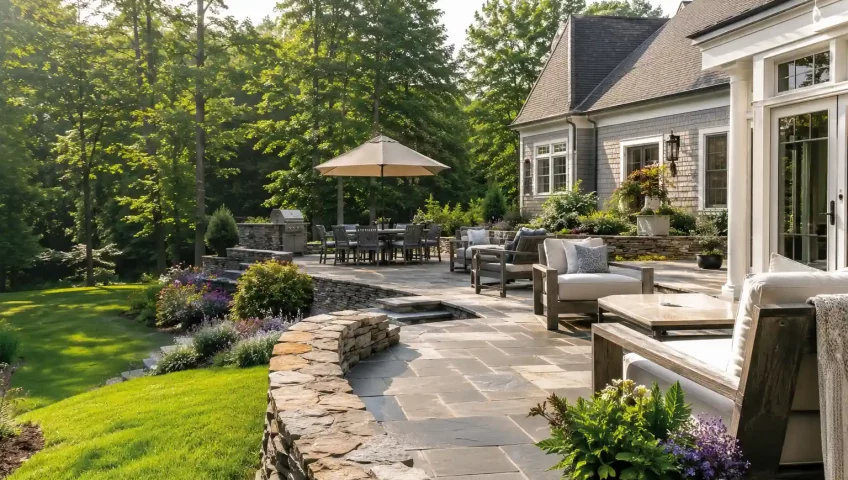
When planning patio construction in Massachusetts, one of the biggest decisions homeowners face is choosing between natural stone and pavers. Both materials can transform your outdoor space, improve curb appeal, and increase property value.
The right choice depends on your home’s style, budget, maintenance expectations, and long-term goals. Here are seven expert tips to help you make the best decision.
1. Why Patio Construction in Massachusetts Requires Climate-Ready Materials
Massachusetts weather can be demanding. Freeze-thaw cycles, snow, ice, and summer heat all affect patio materials.
Natural stone offers exceptional durability, especially materials like bluestone or granite. Pavers, however, are engineered for flexibility and can handle shifting ground conditions.
When planning patio construction in Massachusetts, always choose materials built for New England weather.
2. Match the Patio Material with Your Home’s Style
Your patio should feel like a natural extension of your property.
Natural stone works beautifully with:
- Colonial homes
- Traditional homes
- Luxury landscapes
Pavers complement:
- Modern homes
- Contemporary outdoor spaces
- Structured landscape designs
A cohesive design improves overall property appeal and creates a timeless outdoor living space.
3. Cost Considerations for Patio Construction in Massachusetts
Budget matters in any outdoor renovation project.
Natural stone generally has:
- Higher material costs
- More labor-intensive installation
- Premium custom appearance
Pavers often offer:
- More affordable installation
- Faster project completion
- Wide design flexibility
Professional contractors can help balance budget and design goals during your patio construction in Massachusetts project.
4. Think About Long-Term Maintenance
Maintenance requirements differ significantly.
Natural Stone
Natural stone may require:
- Periodic sealing
- Weed prevention between joints
- Occasional leveling
Pavers
Pavers usually require:
- Joint sand replenishment
- Minor leveling over time
- Easy individual replacement
If low maintenance is important, pavers can be a practical choice.
5. Evaluate Durability and Lifespan
Both materials are durable, but their performance differs.
Natural stone is known for:
- Unique aging character
- Exceptional lifespan
- Premium resale appeal
Pavers are known for:
- Consistent structural performance
- High load resistance
- Easy repair options
Choosing the right material depends on how you plan to use your patio.
6. Natural Stone vs Pavers for Patio Construction in Massachusetts
Design flexibility can influence your decision.
Natural stone offers:
- Organic textures
- Unique color variations
- One-of-a-kind layouts
Pavers provide:
- Uniform shapes
- Consistent color palettes
- Creative pattern options
Your outdoor lifestyle and landscape vision should guide the final design.
7. Choosing the Right Contractor for Patio Construction in Massachusetts
The quality of installation often matters more than the material itself.
An experienced contractor can help with:
- Site grading
- Drainage planning
- Material recommendations
- Long-term structural performance
For expert craftsmanship and custom outdoor living solutions, visit The Lawn Artist MA Services and explore design options for your next project.
Final Thoughts
Whether you choose natural stone or pavers, the success of your patio construction in Massachusetts project depends on planning, craftsmanship, and material selection.
Both options can create a beautiful outdoor space that enhances your home for years to come.
If you’re ready to start, professional guidance can help you build a patio that fits your lifestyle and adds lasting value.
Helpful Resources
The Lawn Artist MA Services
https://www.thelawnartistma.com
Interlocking Concrete Pavement Institute
https://www.icpi.org
Natural Stone Institute
https://www.naturalstoneinstitute.org
University of Massachusetts Landscape Resources
https://ag.umass.edu